Laundry Detergent Dosing: Read the Label Before Adding More
Detergent dose depends on the product and wash conditions. A capful is not a universal measurement across brands, concentrations or machines.
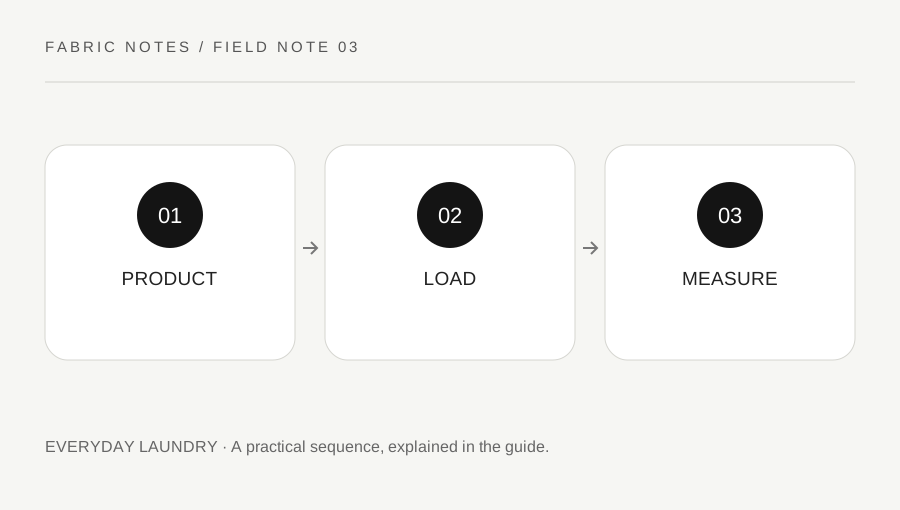
Original explanatory diagram. Numerical examples in this guide illustrate the reasoning; they are not a claim of hands-on testing.
Find the correct product instructions
Check whether the detergent is compatible with your machine, including any high-efficiency requirement. Find the dose guidance on the specific product you are using and note whether it distinguishes load size, soil level or water hardness. Concentrated liquids, powders and unit-dose products are not interchangeable measures.
Do not transfer an old cap’s measuring marks to a new product. If you decant a product, retain the complete original label and keep the product in safe, appropriate storage. Never put detergent in a food or drink container.
Match the dose to the actual load
Use the product’s own measuring device and the guidance for your load and conditions. A lightly worn small load may not need the same amount as a heavily soiled large one. If you do not know your water hardness, check the local water supplier rather than guessing from one garment’s feel.
More detergent is not a universal answer to poor cleaning. Load crowding, incorrect cycle choice, untreated stains or a maintenance issue can also contribute. Inspect those factors before increasing the dose beyond the label guidance.
Investigate residue methodically
If clothing feels coated or shows visible residue, review the dose, load size, dispenser and machine instructions. Keep a note of what changed when the problem began. A newly concentrated detergent combined with the old dose is a different situation from a machine that cannot rinse or drain properly.
For a practical comparison, follow the correct product dose on a compatible, sensibly sized load and record the result. Do not invent a universal tablespoon rule or repeatedly add softener to cover up residue. Store laundry products securely, away from children and pets, and keep unit-dose packets in their original closed packaging.
Compare a product change with a machine problem
Suppose residue appears after you switch to a more concentrated liquid. First compare the new label dose with the amount you are using. Check the measuring cap and whether you continued using the old product’s quantity. Also note any change in load size or cycle.
Now imagine the residue began without a product change, and clothes are unusually wet at the end of a cycle. That pattern deserves a review of machine drainage, loading and the appliance troubleshooting instructions. Adding more detergent would not answer the same question. The useful distinction is between a dosing change and a process problem.
Keep a brief record for the next compatible load: product, measured dose, approximate load, selected cycle and result. Follow the current label rather than running an arbitrary “less is always better” experiment. If the machine shows an error or does not drain normally, stop and follow the appliance guidance. A clear record helps you avoid treating every cleaning problem as evidence that the detergent itself is weak.
A practical checklist
Tick items for your own use. This checklist is saved only in this browser.
Questions that come up
Can I use the same capful for every detergent?
No. Concentration and cap markings vary. Use the instructions and measuring device for that specific product.
Do more suds prove a better wash?
Suds are not a universal measure of cleaning performance. Use a compatible product and its directions for the machine and load.
Can I guess the dose from a friend’s product?
No. Products differ in concentration and instructions. Read the specific label and account for your own load and water conditions.
References & scope
Background references checked on 18 October 2026. The examples and practice exercises are original editorial explanations, not copied procedures or professional advice.