Grease or Mud? Identify the Stain Before Choosing a First Step
Two marks that look equally dark can need different handling. Identify the material and check washability before using a treatment.
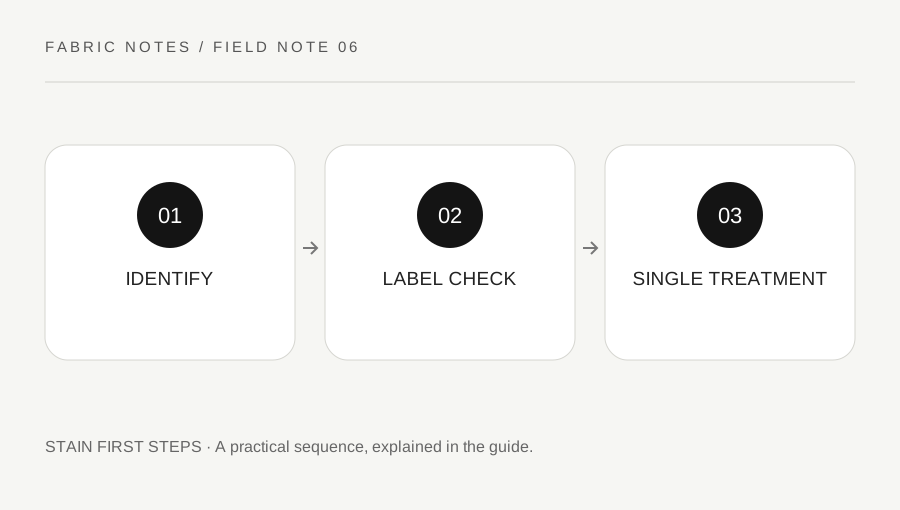
Original explanatory diagram. Numerical examples in this guide illustrate the reasoning; they are not a claim of hands-on testing.
Separate the stain from the fabric decision
Ask what made the mark, when it happened and what has already been applied. Then read the garment label. A method suitable for an ordinary washable cotton item may be unsuitable for silk, leather, an unstable dye or a professional-clean-only garment.
Avoid rubbing an unknown stain into a larger area. Remove loose excess gently where appropriate and keep a record of any treatment. If you do not know what the substance is, do not combine products in the hope that one will work.
Use a suitable first response
For ordinary washable clothing, a grease mark often calls for a compatible pretreatment product before laundering, following the product directions and a discreet colorfastness check. Mud can require allowing surface material to dry and gently removing loose dirt before the permitted wash treatment.
The exact next step depends on the garment and stain reference. Never mix stain removers with bleach, ammonia or other household cleaners. The finder on this site intentionally gives conservative first steps and links to a fuller reference instead of prescribing a chemical mixture.
Inspect and document the result
After the permitted wash, inspect the area before tumble drying. If a mark remains, consult a stain-specific reference and the garment instructions before repeating treatment. Repeated aggressive rubbing can create fabric damage that resembles a persistent stain.
A useful comparison record includes stain type, garment label, product name, treatment time as directed and result. For example, “cooking oil, washable cotton, one compatible pretreatment, no dryer heat before inspection” gives you a clear history. “Tried everything” does not help you or a professional cleaner determine the next safe step.
Compare two ordinary washable garments
Consider a cooking-oil spot on one shirt and dried garden mud on another. Begin with each care label. The oil spot may call for a suitable labeled pretreatment, while the mud first requires gentle removal of loose surface material when appropriate. Starting with the stain identity prevents you from rubbing wet grit into fabric or applying the same product to every mark.
Keep the treatment area controlled and test colorfastness discreetly. Do not interpret “washable” as permission for every temperature, bleach or solvent. Construction, dye and trims can impose limits. If a mark comes from an unknown chemical rather than ordinary food or soil, the conservative household steps may not apply.
After the permitted laundering process, inspect before tumble drying. Write down whether the remaining mark is discoloration, an oily appearance or actual surface damage. If you need help, that description and the product history give a cleaner a better starting point. A careful process can improve your chance of an appropriate result, but it cannot guarantee that every stain will disappear or that an already damaged textile can be restored.
A practical checklist
Tick items for your own use. This checklist is saved only in this browser.
Questions that come up
Can I mix several cleaners for a stubborn stain?
No. Do not mix stain removers with bleach, ammonia or other household cleaners. Follow the individual product and garment instructions.
Does washable mean bleach-safe?
No. Washing and bleaching permissions are separate care instructions. Read the garment and product labels.
What if I cannot identify the stain?
Avoid mixing products or escalating treatment. Record what you know and seek a stain-specific reference or appropriate professional advice.
References & scope
Background references checked on 18 October 2026. The examples and practice exercises are original editorial explanations, not copied procedures or professional advice.