Dye Transfer After Washing: Separate the Items Before Applying Heat
An unexpected color cast needs a different decision from an ordinary dirt mark. Separate the likely source, keep the affected articles out of heat finishing and choose a treatment compatible with each item.
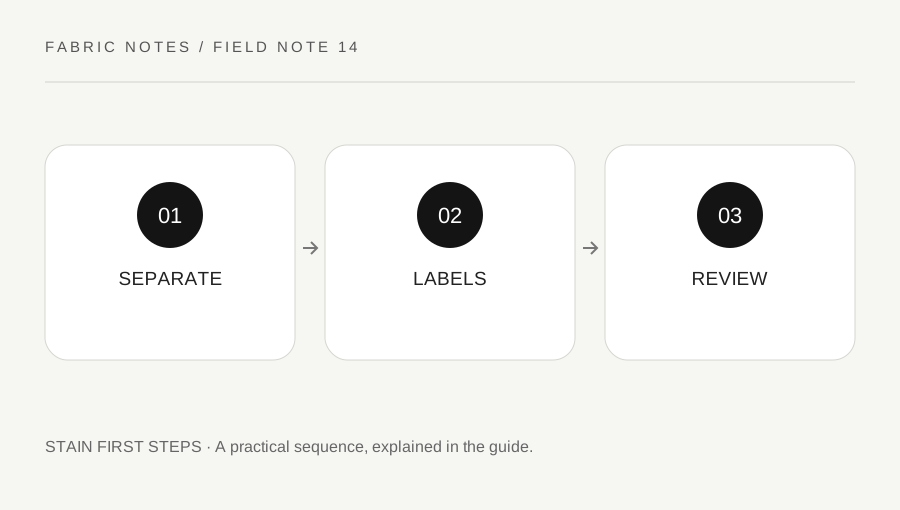
Original explanatory diagram. Examples illustrate a method or decision; they are not claims of personal testing.
Inspect the load and preserve the evidence
Stop the routine at the point you notice the color change. Separate the likely dye source from the affected items and read every relevant care label. A new pink cast on a pale article is different from an intended garment finish, and not every discoloration comes from the same cause. Keep a note or photograph of the observed pattern.
Do not move the affected pieces straight into a hot dryer or iron simply because the wash has ended. ACI's guidance includes reviewing color-transfer problems and the permitted treatment options. The garment and product instructions still determine what is suitable. Do not assume that all white-looking fabric can tolerate any bleach or color-removal product.
Choose a route for each affected article
Read the exact color-remover, detergent or other proposed product directions, including exclusions, testing and handling. A treatment intended for restoration of suitable white articles may not be appropriate for colored or non-colorfast items. Do not use a color-removal process on a valued pattern without understanding that it may affect intended color too.
Keep treatments separate and never improvise mixtures to make them stronger. If the textile is delicate, the label is unclear or the item has sentimental value, seek a suitable cleaner's advice before proceeding. A visible dye-transfer problem is not permission to override the article's care limits. The best next step may differ across several items from the same load.
Use a supported rewash or restoration method
Where the actual instructions permit, follow a compatible rewash or restoration route and keep the affected articles separate from the original source. Measure products and use the stated process rather than copying an amount from an unrelated example. Keep the treatment history clear in case another step or professional advice is needed.
Inspect the result before heat finishing. Do not claim full restoration from a quick wet glance if a residual cast remains uncertain. Follow the product's appropriate assessment and repeat directions, not an endless cycle of stronger treatments. Some transfers may not be completely reversible, and a general guide cannot promise recovery of every dye and textile combination.
Work through a mixed-load example
Imagine a new strongly colored item is washed with several pale garments and an unexpected cast appears. The owner separates the source, checks labels and identifies which affected pieces can use a proposed labelled restoration method. An excluded delicate item is set aside for suitable advice rather than treated with the rest by default.
The owner records the selected method and inspects before drying. For future loads, they use the new item's care and color guidance and keep uncertain pieces separate. This example is a decision process, not a guarantee that every article will return to its original appearance or that one product safely treats the entire mixed load.
Change the sorting information, not just the basket
Keep a brief note that the source item has a transfer concern and follow its manufacturer guidance for later care. A temporary separate basket helps only if the reason is understood by the people doing laundry. Do not assume a single successful wash establishes permanent colorfastness under every condition. Review new products, temperatures and load combinations through the labels. The useful prevention step is an informed routine with a clear exception, rather than blaming one person for a load whose restrictions were never made visible.
A practical checklist
Choices are saved in this browser. Reset them here or clear this site’s browser storage.
Questions that come up
Can every white-looking item use chlorine bleach?
No. Check composition, construction and the actual care label and product directions.
Will a color remover preserve every intended pattern?
Do not assume so. Read the product’s suitability and test instructions and seek advice for valued or uncertain articles.
Should all affected garments be treated together?
Only if their care and the selected method are compatible. Different items may need different routes.
References & scope
Background references checked on 18 October 2026. Worked examples and diagrams are original teaching material.