Wash a Fleece Garment Without Treating Every Synthetic the Same
Fleece care depends on the garment’s construction and label. Prepare the load, use a compatible product and follow the permitted drying route instead of assuming every soft synthetic needs identical treatment.
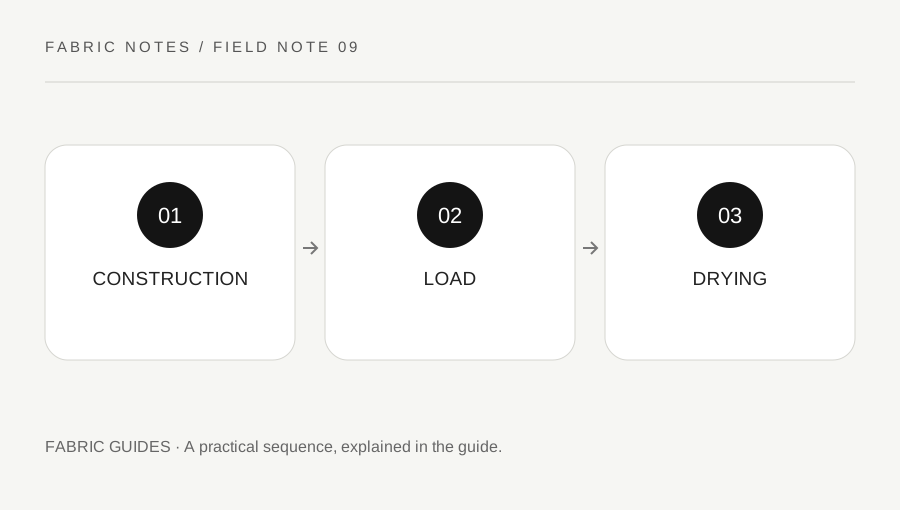
Original explanatory diagram. Examples illustrate a method or decision; they are not claims of personal testing.
Read the complete article
Check the fiber blend, lining, panels, trims and care instructions. A simple fleece layer and a garment combining fleece with other materials can have different limits. Use the manufacturer's exact-item information where available. Patagonia's product-care guidance is useful background for its products, but it should not be treated as permission to override another garment's label.
Inspect for stains, pilling, damage and debris before loading. Keep these observations separate: a cosmetic pill is not proof that the garment is dirty, and a visible mark may need a compatible pretreatment. Avoid shaving, brushing or chemical treatment without checking whether that action suits the actual surface.
Prepare a compatible load
Empty pockets and prepare fasteners under the garment instructions. Separate incompatible colors, rough hardware and lint-shedding items where appropriate. Use the selected machine program's loading guidance rather than crowding bulky soft articles into a small space. A gentle-sounding cycle does not cancel the effects of an unsuitable load combination.
Read detergent and additive directions. Some technical garments restrict fabric softener or other treatments, so do not add a product simply to restore a soft feel. If using a supported fiber-capture accessory, follow its instructions and maintain it properly. Do not claim that an accessory eliminates every environmental impact or makes any prohibited wash suitable.
Use a controlled first routine
Imagine a fleece jacket has an identified permitted wash and drying process. The owner checks a localized mark, prepares the closures and uses a compatible load and measured product. They inspect the result after washing rather than immediately applying an unfamiliar hot-dry routine.
If the jacket still has a mark, they review the stain and label before another treatment. If the surface looks changed, they compare it with the starting condition and actual process. This is an illustrative routine rather than a product test or a universal temperature prescription. The useful outcome is a method traceable to the garment and equipment instructions.
Dry through the permitted method
Follow the actual label for air or machine drying, heat limits and any restrictions. Keep the garment away from direct heat sources or an unsupported ironing treatment. Synthetic construction is not a single guarantee about heat tolerance, and a familiar household setting may not fit a particular panel or trim.
Check that the whole article is ready before storage, including pockets, cuffs and thicker sections. Do not compress a damp garment into a closed bag. If the allowed method is difficult in your home, seek manufacturer advice rather than improvising a high-heat shortcut. A manageable drying plan should be part of deciding when to wash.
Keep appearance and function claims separate
A softer feel after an additive does not prove the garment's intended performance is unchanged. Likewise, a visible surface change does not identify one cause without the care history. Record the product, cycle and drying process if a problem needs support. Avoid a new treatment that promises to restore every synthetic fabric without explaining compatibility.
Retain a brief accepted routine for an item with special instructions. Keep the source label available and review it if a repair or replacement part changes the article. The goal is an appropriate repeatable care process, with honest observations rather than claims that one trick permanently renews every fleece.
A practical checklist
Choices are saved in this browser. Reset them here or clear this site’s browser storage.
Questions that come up
Can fabric softener restore every fleece safely?
Do not assume so. Read the garment and product restrictions, especially for technical construction.
Is every synthetic safe near direct heat?
No. Use the actual article’s heat and finishing instructions.
Does a capture bag remove every environmental impact?
No. Use supported accessories without making unsupported universal claims.
References & scope
Background references checked on 18 October 2026. Worked examples and diagrams are original teaching material.