Ink on Clothes: Stop Spreading It and Identify the Ink First
Water-based ink, ballpoint ink and permanent markers can need different treatment. Check the garment and product guidance before wetting a large area or applying an improvised solvent.
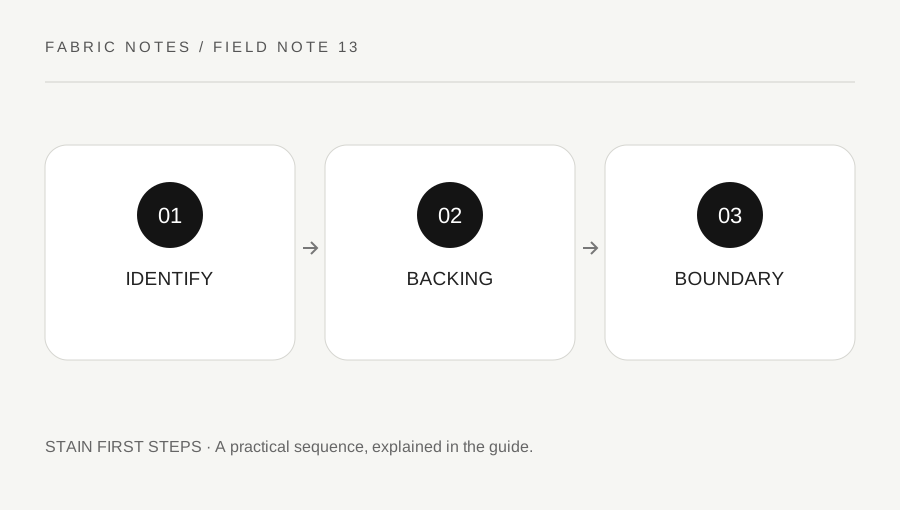
Original explanatory diagram. Examples illustrate a method or decision; they are not claims of personal testing.
Keep the source and textile visible
If possible, identify the pen or marker and keep its packaging or type in your private note. Read the garment care label and inspect the extent of the mark, including whether ink has reached another layer. Tide's guide distinguishes different ink categories, which is a useful reason not to treat every blue line as the same stain.
Stop rubbing or spreading the mark across the garment. Do not put it into an ordinary mixed load before choosing a route, because ink and treatment material can transfer. Avoid applying heat to make the garment wearable for an immediate event. A hurried cosmetic fix can make the later care question harder.
Prepare a supported limited treatment
Use a clean appropriate backing where the chosen method requires it, and protect the surface below. Read both product and garment instructions, including exclusions and ventilation or handling requirements. Test in a hidden representative area as directed. A dedicated compatible ink treatment may be a more suitable question than an improvised mixture of familiar household liquids.
Do not assume hairspray, hand sanitizer or rubbing alcohol is universally safe because a generic tip mentions it. Formulations and textiles differ, and a solvent can affect dye, finish or trim. If the method cannot be verified for the item, stop and ask a suitable cleaner or manufacturer. A small valued article does not become expendable merely because the stain looks difficult.
Control transfer and inspect the process
Follow the chosen label's application and removal method, replacing a soiled backing where directed so lifted ink is not pressed into another area. Do not keep increasing the treated area or rubbing force because the color is not immediately gone. Track what product and method were used so the next decision has a clear history.
If laundering is permitted as part of the method, use the garment's care process and inspect before drying or ironing. A residual shadow may need another permitted step, while a changed dye or texture is a reason to stop. The guide does not promise that every permanent ink can be removed at home or that a visible improvement establishes complete safety for the fabric.
Work through a pocket-leak example
Imagine a washable shirt has a ballpoint leak inside a pocket. The owner removes the pen, checks the label and confirms a compatible treatment route. They prepare the required clean backing and perform the instructed hidden test before touching the visible mark. They keep the pocket layers separated as the supported method allows.
After the permitted treatment and wash, they inspect the whole affected area before heat finishing. If ink remains or the method is unsuitable, they seek professional advice with the pen type and treatment history. This is an illustrative decision sequence, not a universal solvent recipe or a guarantee for every shirt and ink.
Give a cleaner the history you actually know
If handing the item over, state the ink type if known, the approximate timing and every treatment already applied. Do not describe the garment as untreated if you used a household product. Keep uncertainty explicit rather than guessing the pen chemistry. Accurate history helps the professional assess the next step and prevents an accidental combination with residues you forgot to mention. The practical goal is controlled handling and a suitable route, even when complete removal cannot be promised.
A practical checklist
Choices are saved in this browser. Reset them here or clear this site’s browser storage.
Questions that come up
Is hairspray safe for all ink stains?
No. Products and fabrics differ. Use a verified compatible method rather than a universal household-solvent rule.
Can permanent ink always be removed?
No guarantee applies to every ink, textile and treatment history. A suitable professional route may be needed.
Should the cleaner know about previous attempts?
Yes. State what was used and keep unknown details explicitly uncertain.
References & scope
Background references checked on 18 October 2026. Worked examples and diagrams are original teaching material.