Prepare Zips, Hooks and Delicate Details Before a Wash
A few preparation checks can prevent a garment from tangling or catching other items. Follow the article’s instructions and inspect the actual fasteners instead of applying one rule to every closure.
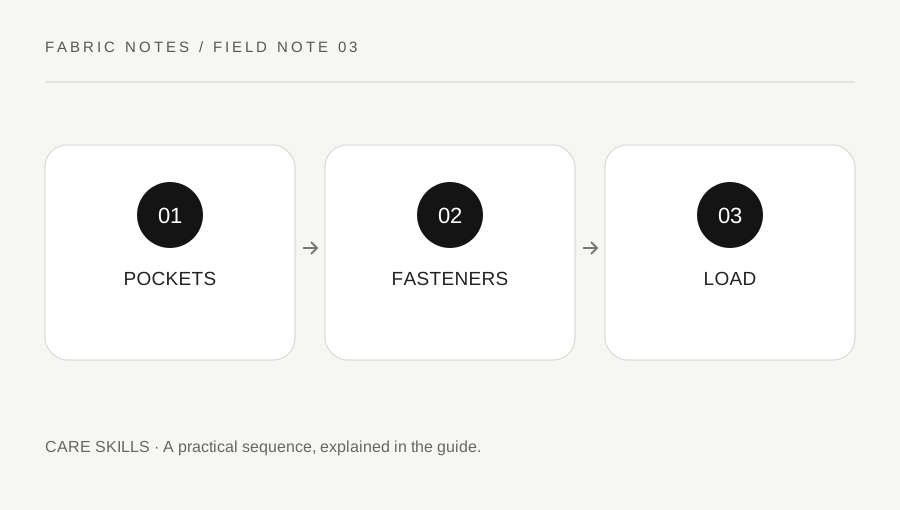
Original explanatory diagram. Examples illustrate a method or decision; they are not claims of personal testing.
Inspect the whole garment before loading
Empty pockets and check for tissues, pens, loose objects and removable accessories. Read the care label and any manufacturer preparation instructions. Notice damaged seams, a partly detached trim or a sharp broken fastener before washing. A cycle can make an existing fault more visible, so record or repair what needs attention through an appropriate method.
Separate items whose details are not compatible with the planned load. A robust zippered jacket and a delicate lace garment may need different treatment even if their colors look similar. Sorting by care and construction helps the preparation step work. Do not expect a mesh bag to make an otherwise prohibited wash or overloaded machine suitable.
Use the closure instruction for the actual article
Follow the garment guidance for zips, hooks, ties and buttons. Different closures and constructions can need different handling, so avoid a universal instruction to fasten every part tightly. Secure loose ties appropriately where the instructions call for it and keep detachable pieces identified. Do not force a damaged zip or pull a fragile loop to make it close.
For a permitted mesh bag, choose a suitable size that lets the article be handled through its intended process. Do not pack several items tightly into one small bag and assume that gentleness is guaranteed. Read the bag and machine instructions too. The purpose is manageable separation, not a shield that cancels the care requirements of the garment inside.
Work through a mixed-basket example
Imagine a basket includes a fine top, a garment with exposed hooks and a heavy item with a broken zip pull. The owner checks labels, separates incompatible construction and sets the damaged item aside. They prepare permitted closures and use a suitable bag only where it fits the actual care method.
They do not add every piece to the same delicate cycle merely because that setting sounds cautious. Load weight, friction and differing drying requirements still matter. This is an illustrative preparation exercise rather than a rule for a particular machine. The useful habit is to see each garment as a constructed item with parts that can interact during care.
Inspect before drying and storage
After washing, check whether ties, fasteners and details remain in order before moving to the permitted drying step. Untangle gently rather than pulling hard on wet fabric. Do not use heat to finish an item whose stain or damage still needs review. Keep any removed accessories with the correct garment through the process.
If snagging or damage repeats, review the load combination, preparation and machine guidance instead of simply increasing the number of bags. Seek garment-specific advice where a detail is unusual or valuable. A useful routine is brief enough to perform every time and specific enough to prevent the same known interaction, while care labels remain the foundation of the whole process.
Make a small exception station
Keep a clear place for items needing repair, label clarification or a different treatment. A note such as damaged hook, do not load yet is more useful than placing the item back in the basket and hoping another person notices. Keep the station dry and private where necessary. Review it regularly so it does not become a permanent pile. This simple handoff keeps preparation decisions visible when more than one person does the laundry and reduces accidental inclusion in the next routine load.
A practical checklist
Choices are saved in this browser. Reset them here or clear this site’s browser storage.
Questions that come up
Does a mesh bag make every garment machine washable?
No. The garment’s care instructions and the machine’s limits still apply.
Should every button be fastened tightly?
Follow the actual garment guidance rather than applying one closure rule to all construction.
What if a fastener is already damaged?
Set the item aside for an appropriate repair or advice instead of forcing it through the routine load.
References & scope
Background references checked on 18 October 2026. Worked examples and diagrams are original teaching material.