Care for Stretch Activewear by the Label and Load
Stretch garments can combine elastic fibers, technical finishes and delicate details. Keep care specific to the article and separate ordinary cleaning from promises to restore every performance feature.
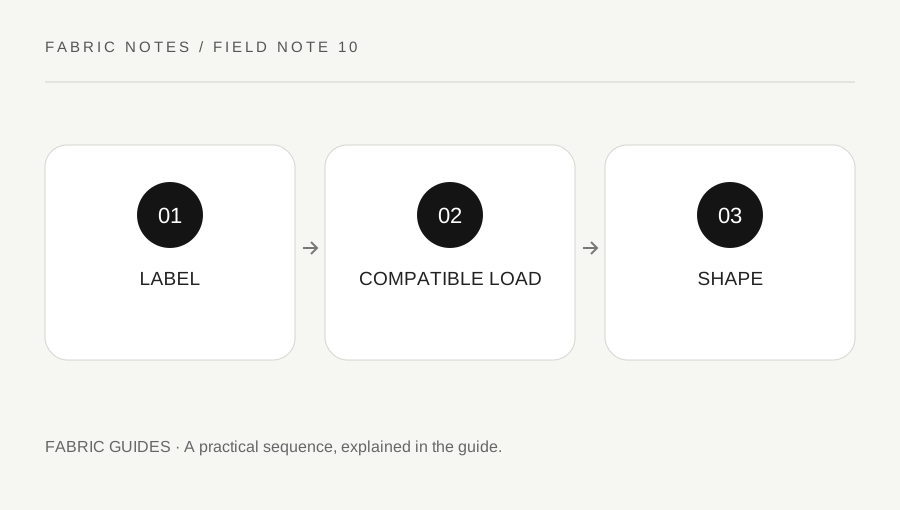
Original explanatory diagram. Examples illustrate a method or decision; they are not claims of personal testing.
Identify the complete fabric system
Read the composition and manufacturer care for the exact item. Leggings, a lined top and a technical shell may share some fibers while needing different treatment. Do not choose a process solely because the garment stretches or is used for exercise. Inspect pads, mesh, bonded areas and trims that may affect preparation.
Use exact-item information where available. Lululemon's general care page, for example, directs owners to specific material and care information and restricts softeners for its technical fabrics. That is manufacturer guidance for its products, not proof that every garment from another brand has an identical recipe. Keep the actual label as the boundary.
Prepare and separate deliberately
Empty pockets and follow the instructions for removable components and closures. Keep small parts associated with the correct garment. Choose compatible colors and textures rather than mixing the item with rough hardware or a heavy unrelated load. Read the machine manual for the selected cycle's capacity and handling.
Do not leave an uncertain item in a routine basket while expecting another person to remember its special care. A short private note or separate location can prevent accidental inclusion. If the garment needs care after use, plan the process rather than sealing damp items into an unattended bundle. This is an ordinary handling routine, not a claim about a fixed safe storage interval.
Measure products and avoid unsupported additions
Use a detergent suited to the item and follow its dose and use instructions. Check restrictions on softener, bleach and other additives. A stronger fragrance does not demonstrate that a garment is cleaner, and more detergent can create another problem. Do not combine several treatments to overcome a persistent odor without reviewing the labels and actual routine.
For a localized stain, identify it and use a compatible permitted first step. Test as instructed in a discreet area and inspect before heat finishing. A performance claim on a cleaning product does not override the garment's construction limits. Keep the product and care instructions available if the result needs further advice.
Work through a leggings-care example
Imagine a stretch garment's label gives a specific wash and drying route. The owner prepares it, separates incompatible items, measures the appropriate product and follows the permitted method. They inspect seams, surface and shape afterward rather than using a hot dryer to hurry the process because another cotton item tolerates it.
If the garment changes, they record the actual treatment and compare existing wear before choosing a cause. This is an illustrative workflow, not an independent test of a brand or a promise of permanent elasticity. A clear record makes manufacturer advice more useful and avoids repeating an unsuitable process from memory.
Dry and store without forcing the shape
Use the permitted support and drying method and avoid stretching a wet article into an exaggerated shape. Keep direct heat and ironing within the label's limits. Inspect thicker areas, pockets and removable components before storage. A neat fold is not evidence that the drying stage is complete.
Keep the accepted routine simple enough to repeat. If special finishes or bonded construction raise questions, use the manufacturer's current guidance rather than a universal synthetic-fabric trick. The useful outcome is clean appropriately cared-for clothing with its condition observed honestly, while exercise advice, product rankings and performance guarantees remain separate from the laundry task.
A practical checklist
Choices are saved in this browser. Reset them here or clear this site’s browser storage.
Questions that come up
Can every stretch garment use the same care routine?
No. Blends, finishes and construction differ, so follow the exact article’s instructions.
Does more fragrance prove cleaning worked?
No. Inspect the actual result and review product dose, load and drying if problems persist.
Can a hot dryer restore shape quickly?
Do not use an unsupported heat shortcut. Follow the garment’s drying instructions.
References & scope
Background references checked on 18 October 2026. Worked examples and diagrams are original teaching material.