Wash Sheets and Duvet Covers Without Losing Track of Care and Drying
Large bedding can hide smaller items and remain damp inside folds. Prepare the articles, use the machine’s supported load and review the full drying result before making the bed.
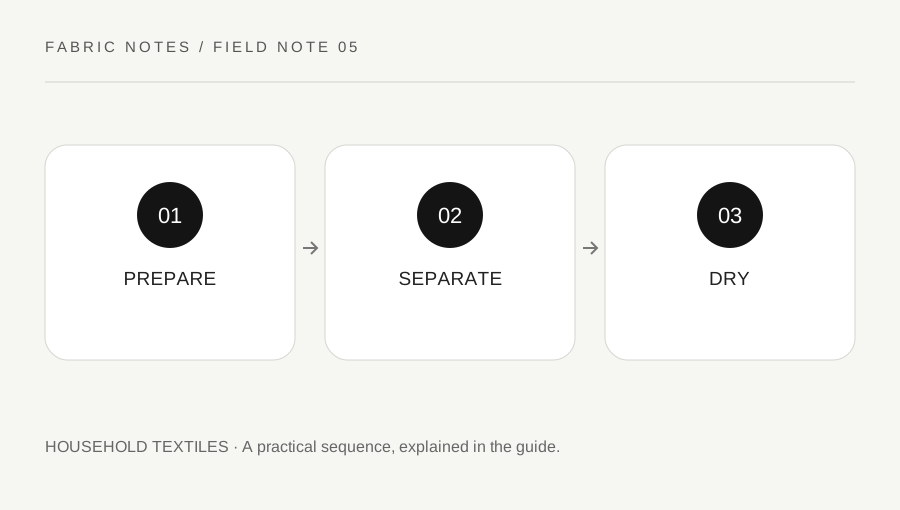
Original explanatory diagram. Examples illustrate a method or decision; they are not claims of personal testing.
Read labels for every bedding component
Check sheets, pillowcases, covers and any filled item separately. A duvet cover is not the same article as the filled duvet inside it, and a decorative finish can change care requirements. Do not put everything through one routine because the pieces belong to the same bed. Identify any item requiring a different machine, professional care or special handling.
Inspect for stains and remove loose objects before loading. Use compatible pretreatment only under the garment and product instructions. If bedding has a specific contamination or health-related requirement, follow the relevant qualified guidance rather than relying on this ordinary household workflow. No general label-reading article can establish one universal decontamination setting.
Prepare closures and load within the manual
Follow the cover's guidance for closures and any preparation intended to reduce smaller items entering it. Check the machine manual for the selected program's capacity and handling of bulky articles. A large textile can occupy substantial space even when its dry weight seems manageable. Do not force an overloaded arrangement into a routine designed for a smaller load.
Keep care and color compatibility in view. Use the detergent directions and any additive restrictions rather than increasing product simply because the item is physically large. A supported load and clear preparation make the cycle easier to assess. They do not guarantee that tangling can never occur, so plan to inspect the articles at the next stage.
Work through a cover-and-sheet example
Imagine a duvet cover and sheet have compatible care labels and fit the intended program under the manual. The owner prepares the cover as directed, measures the product and starts a supported load. When unloading, they check inside the cover for trapped pillowcases and gently separate folds before the permitted drying step.
They inspect thick seams and corners later rather than assuming the outside dryness represents the whole article. If a dryer is allowed, they use its supported handling and load guidance. If air drying is required or chosen within the label, they arrange enough space for the actual large pieces. The example illustrates checkpoints, not a specific cycle or a promise of a fixed drying time.
Finish the routine before storage or use
Check that the articles are appropriately dry and that stains or care concerns do not need another decision before ironing or other heat finishing. Follow the label's ironing restrictions separately from washing. A freshly washed piece can still be the wrong item for a high-temperature finish or have damp areas hidden in a folded bundle.
If tangling or poor results recur, review preparation, load size and the machine's relevant instructions. Do not add an improvised object or unsupported accessory solely because a video promises untangled bedding. Keep the accepted routine simple and repeatable. A useful result is complete clean bedding with a verified drying stage, not merely an empty machine and a large folded pile.
Keep filled bedding outside assumptions from covers
If the next task involves a pillow, topper or filled duvet, start a separate check of its label and the equipment required. Do not infer that a cover's successful routine applies to the filling. Size, construction and permitted drying can differ substantially. Seek the manufacturer's or an appropriate professional's guidance where the home setup cannot meet the stated care. Keeping these articles distinct prevents an ordinary bedding day from becoming an unsupported experiment with a much larger and harder-to-dry item.
A practical checklist
Choices are saved in this browser. Reset them here or clear this site’s browser storage.
Questions that come up
Can the duvet follow the cover’s instructions?
Not automatically. Read the filled article’s own label and check whether your equipment can meet its requirements.
Does a dry exterior prove the whole cover is ready?
No. Check folds, corners and any smaller articles trapped inside.
Should I add an improvised anti-tangle object?
Use only supported accessories and methods under the machine and textile instructions.
References & scope
Background references checked on 18 October 2026. Worked examples and diagrams are original teaching material.