Wash Towels with a Clear Load and Complete Drying Plan
A towel routine needs more than a temperature guess. Read the actual labels, allow the machine to work within capacity and make sure the permitted drying method finishes before storage.
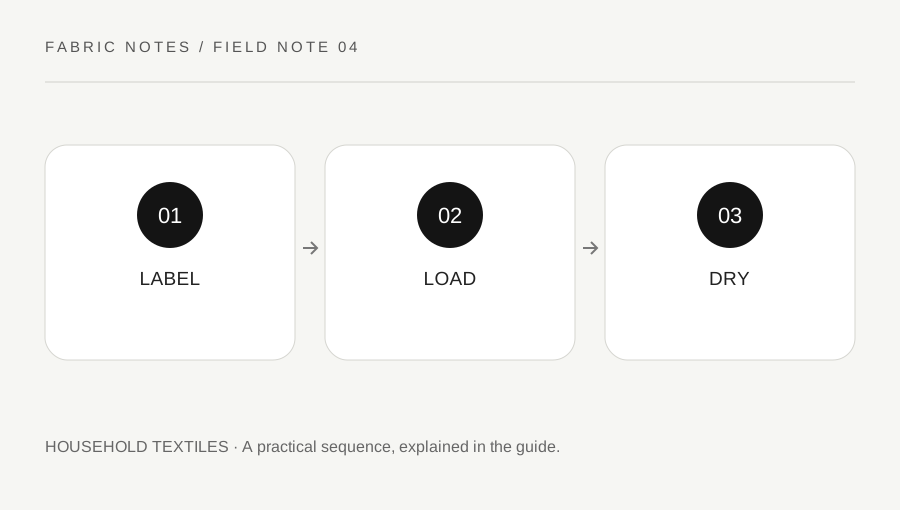
Original explanatory diagram. Examples illustrate a method or decision; they are not claims of personal testing.
Read the towels as finished articles
Check composition, colors, decorative details and care instructions. A plain towel, a trimmed towel and a lightweight travel towel may not share the same limits. Do not choose a hot program solely because the item is used in a bathroom. Follow the actual label and any relevant household or professional hygiene requirements rather than treating this ordinary care guide as a universal decontamination process.
Separate uncertain or new strongly colored items appropriately. Inspect for stains that need a compatible pretreatment and read the product instructions. Keep special contamination or unusual cleaning needs under appropriate guidance. The routine here concerns ordinary household textiles with identifiable care requirements, not a promise that one wash setting handles every situation.
Choose a manageable machine load
Use the machine manual's capacity and loading guidance for the intended program. A drum filled with bulky towels may need a different practical arrangement from a load of light shirts. Do not force the door closed or assume that the maximum stated capacity applies identically to every cycle and textile. Keep the load compatible in color, care and soil level.
Dose detergent from the actual product instructions, machine type, load and other relevant directions. More product is not automatically a better clean. Follow label restrictions on softeners or other additives, especially where the textile has a specific function. Do not combine products or improvise a stronger mixture to compensate for a crowded load.
Work through a repeatable towel day
Imagine a household has several towels with compatible labels and a machine program that supports them. The user checks stains, loads within the manual's guidance and measures the appropriate product. They prepare the permitted drying space or dryer program before starting so wet items are not left waiting in a pile.
After the cycle, they inspect the result and separate items for effective drying under their labels. If one remains damp in a folded area, they continue the suitable drying process before storage. These are practical checkpoints, not a fixed temperature or frequency prescription. The correct routine depends on the actual articles, use and applicable requirements.
Investigate an unsatisfactory result methodically
If towels retain an unwanted smell, feel coated or do not seem clean, review the load, dosing, drying and machine-care instructions. Avoid assuming one symptom proves a need for more fragrance or a stronger chemical. The ACI's laundering-problem guide offers categories that can help frame a question, while the product and equipment instructions remain necessary.
Change one justified part of the routine and inspect again. Keep the machine maintained through its manual and leave abnormal operation to the appropriate support route. A useful towel routine produces clean appropriately dried items and a repeatable process, with storage and product use considered together rather than relying on an internet trick that ignores the labels.
Keep storage from undoing the drying step
Use a suitable clean storage area and avoid compressing an item that still feels damp into a closed stack. Check thick borders and folded sections rather than only the exposed center. If several people put laundry away, make the ready-to-store stage clear. A simple distinction between drying, awaiting check and ready can prevent a damp towel from being mixed with finished items. This is an ordinary workflow check, not a measured claim about a particular storage time or microbial outcome.
A practical checklist
Choices are saved in this browser. Reset them here or clear this site’s browser storage.
Questions that come up
Should every towel use the hottest cycle?
No. Follow the article’s label and any specific applicable hygiene guidance rather than a universal temperature rule.
Does more detergent solve every odor problem?
No. Review load, dosing, drying and machine care before choosing a change.
Can a mostly dry towel go straight into a closed stack?
Complete the suitable drying process and inspect thick or folded areas before storage.
References & scope
Background references checked on 18 October 2026. Worked examples and diagrams are original teaching material.